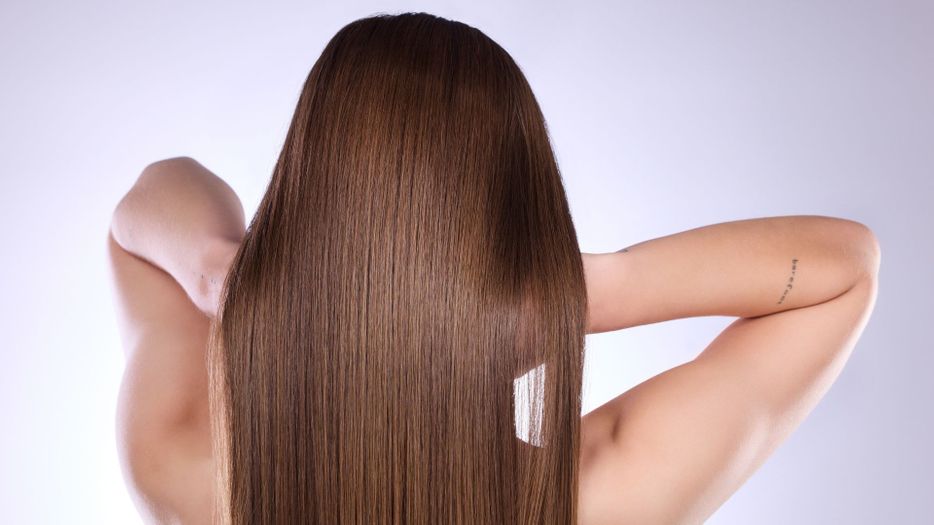
Keratin treatments are designed to make hair smoother, easier to manage, and less reactive to frizz and humidity. Depending on the formula and technique, a treatment may also soften waves, loosen curls, reduce volume, and create a noticeably straighter finish.
The important part is that not every keratin treatment produces the same result. Your natural texture, hair condition, color history, treatment formula, and desired finish all matter. Keratin smoothing is also not automatically the same as permanent hair straightening.
If you are considering professional keratin treatments in Shrewsbury, NJ, Salon CoCo BOND offers smoothing services that can be tailored around your hair type and styling goals.
Quick Answers About Keratin Treatments
| Question | Quick Answer |
|---|---|
| What does a keratin treatment do? | Smooths hair, reduces frizz, and can loosen curls depending on the treatment |
| How long does it last? | Usually several months, depending on the formula, hair, and aftercare |
| How long does it take? | Typically a few hours, with longer or thicker hair often requiring more time |
| Does it straighten hair? | It can, but the amount of straightening varies |
| Is it permanent? | Most keratin smoothing treatments are temporary |
| Is it good for curly hair? | It can be if you want less frizz, easier styling, and potentially looser curls |
| Can you use it on bleached hair? | Sometimes, but the current condition of the hair should be evaluated first |
What Is a Keratin Treatment and How Does It Work?
Keratin is a structural protein naturally found in hair. It contributes to the strength and structure of each strand, but a professional keratin treatment is more complicated than simply adding missing protein back into the hair.
The term “keratin treatment” is commonly used for a broad category of professional hair smoothing services. A smoothing solution is applied to the hair and then processed according to the specific system, often with blow drying and flat ironing.
The combination of the professional formula, application technique, and heat changes how the hair behaves. Depending on the system, the result can range from subtle frizz control to significant curl reduction.
That is also why a keratin shampoo, conditioner, mask, or serum is not equivalent to a professional treatment. Those products can condition the hair and temporarily improve its feel, but they do not reproduce the full salon process.
What Happens During a Keratin Treatment?
The exact process depends on the professional system being used, but a typical appointment includes several stages.
- Consultation: Your stylist evaluates your natural texture, density, color history, existing damage, and the result you want.
- Cleansing and preparation: The hair is washed and prepared according to the treatment instructions.
- Product application: The smoothing formula is distributed throughout the appropriate sections of hair.
- Processing: The product is given time to work according to the manufacturer’s protocol.
- Blow drying: The hair is dried before the final smoothing stage.
- Heat sealing: A flat iron is commonly used to complete the process. Temperature and technique should be selected with the condition of the hair in mind.
- Finishing: Some systems are washed and finished during the same appointment. Others have specific instructions that must be followed after leaving the salon.
This is one reason a consultation matters. A stylist working with healthy, coarse curls may approach the service differently than a stylist working with fine, highlighted hair.
How Long Does a Keratin Treatment Take?
A keratin treatment generally requires a few hours, but there is no single appointment length that applies to everyone.
Long, thick, or very dense hair usually requires more sectioning, product application, blow drying, and flat ironing. Shorter or finer hair may take less time.
The specific treatment system also matters. Processing times and finishing procedures vary between professional formulas.
If you are scheduling around work, childcare, or another appointment, ask the salon how much time they recommend reserving based on your hair before you arrive.
What Results Can You Expect?
Most people consider keratin because they want their hair to become easier to deal with every day.
Depending on your starting texture and the treatment used, potential results include:
- Less frizz
- Smoother texture
- More shine
- Easier brushing and styling
- Faster blow drying
- Reduced volume or bulk
- Softer waves and curls
- A straighter appearance
The key word is potential. Someone with slightly wavy hair may see a dramatic straightening effect, while someone with tight curls may still have noticeable curl after treatment.
Can a Keratin Treatment Straighten Hair?
Yes, a keratin treatment can make hair straighter, but the degree of straightening depends on the formula, your natural texture, and how the treatment is performed.
Think about the possible results as a spectrum:
Frizz reduction → curl relaxation → straighter appearance
One client may simply want her curls to look smoother and more defined. Another may want waves to dry almost straight. Someone else may want maximum curl reduction to make regular blowouts easier.
Those are different goals and should be discussed before the treatment begins.
Keratin smoothing should also be distinguished from permanent chemical straightening. Most keratin treatments gradually wear off. Chemical relaxers and permanent straightening systems intentionally create a more permanent change in treated hair.
Will Your Hair Still Be Curly?
It can be.
A keratin treatment does not automatically mean eliminating your curls. Some treatments and techniques produce relatively mild curl reduction, while others can create a much straighter result.
Your original curl pattern matters too. Loose waves, traditional curls, and tightly coiled textures will not respond identically.
Another important distinction is how you style your hair afterward. Hair that still looks wavy or curly when air dried may become significantly smoother with a quick blow dry.
If retaining your curls is important, tell your stylist that before the treatment. “I want less frizz” and “I want straighter hair” are not the same request.
Keratin Treatments for Different Hair Types
Your hair type does not automatically determine whether keratin is right or wrong for you. The better question is what you want to change about your hair and whether its current condition can comfortably handle the service.
Keratin Treatment for Curly Hair
A keratin treatment for curly hair can reduce frizz, loosen the curl pattern, decrease bulk, and make the hair easier to style.
For someone who regularly stretches or blows out curly hair, that can also mean spending less time trying to create a smooth finish.
But curl reduction can be either a benefit or a drawback.
If you love your natural curls and only want to control surface frizz, your stylist needs to understand that. The goal should be to select a treatment and technique that make sense for the result you actually want rather than assuming every curly client wants straight hair.
Keratin Treatment for Frizzy Hair
Frizz is one of the biggest reasons people consider keratin treatments.
Smoothing treatments can make the hair surface behave more uniformly, which helps reduce the rough, expanded appearance people associate with frizz. Hair may become easier to blow dry and less likely to look unruly as soon as the weather gets humid.
That does not mean keratin makes hair completely unaffected by humidity.
It also does not mean you have to straighten your hair to address frizz. A person can have curly hair and want smoother curls without wanting those curls removed.
Keratin Treatment on Bleached or Color Treated Hair
A keratin treatment on bleached hair requires more consideration because bleaching can leave hair more porous, dry, fragile, and susceptible to breakage.
The concern is not simply whether keratin and bleach can exist on the same strand. A stylist needs to determine whether the hair is currently strong enough for another professional service and the heat involved in completing it.
The same evaluation matters for hair with:
- Highlights
- Balayage
- Permanent color
- Toner
- Multiple previous lightening sessions
- Other chemical treatments
Two people can technically both have “bleached hair” while having completely different levels of damage.
Hair that is highlighted but strong and well maintained may present a very different situation from hair that is stretching, snapping, severely dry, or visibly compromised.
A professional consultation should therefore consider both what has been done to your hair and what condition it is in today.
Should You Color Your Hair Before or After Keratin?
There is no useful universal rule for every combination of hair color and smoothing treatment.
The ideal order can depend on whether you are getting highlights, bleach, permanent color, toner, root coverage, or another color service. It can also depend on the exact keratin system being used.
Some smoothing services may affect how fresh color appears, while the timing of subsequent chemical services may also matter.
If you plan to have both services, tell your stylist in advance so the appointments can be scheduled in the proper order for the products being used.
Who Should and Should Not Get a Keratin Treatment?
Keratin treatments can work across many textures, but that does not mean every head of hair needs the same treatment.
| Hair Type or Concern | Keratin Treatment Considerations |
|---|---|
| Frizzy hair | Often a strong candidate when smoother, easier styling is the goal |
| Wavy hair | Can reduce frizz and loosen the existing texture |
| Curly hair | Can improve manageability but may reduce curl definition |
| Thick hair | May reduce bulk and make styling easier |
| Color treated hair | Often possible, but service timing matters |
| Bleached hair | Current strength and damage should be evaluated carefully |
| Fine hair | Consider how much volume you want to retain |
| Severely damaged hair | May not tolerate additional processing and heat well |
When Keratin May Not Be the Best Choice
Keratin may not be the right next service if your hair is already extremely brittle, breaking, or severely compromised.
You may also want another option if preserving every bit of your natural curl pattern is your highest priority, or if what you actually want is permanent straightening rather than temporary smoothing.
Maintenance matters too. If the aftercare required by a particular system does not work with your lifestyle, the treatment may not deliver the value you expect.
Sometimes the right answer is not a stronger smoothing treatment. It may be improving the condition of the hair first or choosing a service designed more around hydration and conditioning than curl reduction.
Keratin Treatment Pros and Cons
Keratin treatments can make daily hair care significantly easier, but there are tradeoffs worth understanding before committing.
| Pros | Cons |
|---|---|
| Less frizz | Can loosen your natural curl pattern |
| Smoother texture | Results eventually wear off |
| More shine | Heat is commonly part of the professional process |
| Easier styling | Not appropriate for every hair condition |
| Potentially faster blow drying | Requires proper aftercare |
| Less bulk | Appointments can take several hours |
| Better manageability | Ingredients and treatment type should be understood |
Is a Keratin Treatment Worth It?
It can be worth it if the treatment solves a problem that takes up a significant amount of your time.
For example, someone who spends a long time fighting frizz every morning may value smoother hair and easier blowouts much more than someone who already enjoys how her natural hair behaves.
Ask yourself:
- What result am I actually looking for?
- How healthy is my hair right now?
- How much time do I currently spend styling it?
- Is frizz one of my biggest frustrations?
- How important is preserving my current curl pattern?
- Am I comfortable with the maintenance?
- How frequently do I already use heat?
The best reason to get keratin is not simply because it is popular. It is because the results fit your hair and your routine.
How Long Does a Keratin Treatment Last?
A keratin treatment generally lasts several months, although longevity varies considerably.
Salon CoCo BOND currently notes that its keratin treatments can last up to three months depending on hair type and care, which is a useful reminder that the product itself is only one part of the equation.
What Makes a Keratin Treatment Last Longer or Wear Off Faster?
Several factors affect longevity:
- The specific professional formula
- Your natural hair texture
- Hair porosity
- How frequently you shampoo
- The shampoo and conditioner you use
- Chlorinated pool water
- Salt water
- Your normal styling routine
- How closely you follow the treatment’s aftercare instructions
Someone who washes frequently and swims several times per week may see the smoothing effect fade faster than someone whose routine is gentler on the treatment.
How Does Keratin Wear Off?
Most keratin smoothing treatments do not suddenly disappear one morning.
The effect gradually becomes less noticeable. Frizz may start returning, your original texture becomes more apparent, and styling may begin taking longer again.
New growth also has your natural untreated texture, so the difference becomes more noticeable as your hair grows.
How Often Can You Get a Keratin Treatment?
There is no single schedule that is appropriate for every person.
How often you repeat the service should depend on the formula, how long your results last, your color and chemical history, and the current health of your hair.
If your previous treatment still looks good, there is little reason to repeat the service simply because a certain number of weeks has passed.
Keratin Treatment Aftercare
Good keratin treatment after care can make a noticeable difference in how your hair looks and how long the smoothing effect lasts.
The most important rule is simple: follow the instructions for the exact professional treatment you received.
Not every keratin system has identical aftercare.
When Can You Wash Your Hair?
This varies by formula.
Some modern smoothing systems allow the hair to be washed relatively quickly. Others require a setting period before shampooing, getting the hair wet, or manipulating it heavily.
Do not assume that the old rule of waiting several days applies to every treatment.
Your stylist should tell you exactly when you can wash your hair before you leave the salon.
What Products Should You Use?
A simple routine is usually better than throwing dozens of products at freshly treated hair.
Focus on:
- Shampoo: Use the type recommended for your smoothing system.
- Conditioner: Keep the hair soft and properly moisturized.
- Hair masks: Periodic conditioning can be helpful, particularly for dry or chemically treated hair.
- Leave in conditioner: Useful when the hair needs additional moisture or detangling.
- Heat protectant: Keratin does not make your hair immune to heat damage.
- Styling products: Choose products that support smoothness without unnecessary buildup.
Sulfate free and sodium chloride conscious products are commonly recommended for keratin treated hair, including in Salon CoCo BOND’s current care guidance. However, the safest approach for maintaining your specific result is following the product recommendations that accompany the treatment used on your hair.
Swimming, Heat Styling and Everyday Maintenance
Frequent exposure to pools and ocean water can shorten the life of some smoothing treatments. Salon CoCo BOND specifically cautions that repeated prolonged exposure to water can affect its keratin results.
If you swim regularly, discuss that before booking so you know what to expect.
You can still style keratin treated hair with heat, but continue using a heat protectant and avoid using more heat than necessary.
If your treatment has an initial setting period, your stylist may also recommend temporarily avoiding tight ponytails, clips, or other styles that leave bends in the hair.
Once that period has passed, normal styling can usually resume according to the instructions for your treatment.
Are Keratin Treatments Safe?
Safety is one area where it is especially important not to treat every smoothing product as identical.
Professional formulas contain different ingredients and use different application and heating procedures. Ask what product is being used rather than relying only on the general phrase “keratin treatment.”
Formaldehyde and Formaldehyde Releasing Ingredients
Some professional hair smoothing products contain formaldehyde or ingredients associated with formaldehyde exposure during use.
The FDA explains that hair smoothing solutions are commonly followed by heat processing and that formaldehyde present in certain products can be released into the air as a gas when heated. The agency identifies names including formaldehyde, formalin, and methylene glycol and recommends that consumers ask their salon what ingredients are in the product being used.
Formaldehyde exposure can irritate the eyes, nose, throat, lungs, and skin. The FDA identifies formaldehyde as a known human carcinogen and emphasizes ventilation and ingredient awareness when these products are used.
What Does Formaldehyde Free Mean?
“Formaldehyde free” is useful information, but the wording on the front of a product should not be the entire safety evaluation.
OSHA has previously found formaldehyde exposure associated with certain hair smoothing products that were labeled formaldehyde free or did not properly identify formaldehyde on their labels or safety documentation.
That does not mean every product using the phrase is unsafe. It means consumers and professionals should look beyond a single marketing claim.
Ask which formula is being used, review ingredient and safety information when needed, and choose a salon that understands the manufacturer’s required application and ventilation procedures.
What About Glyoxylic Acid?
Some modern smoothing products use glyoxylic acid or related chemistry instead of traditional formaldehyde based systems.
That should not automatically be interpreted as meaning there are no potential health concerns.
Published medical literature has reported cases of acute kidney injury following exposure to certain hair straightening products involving glyoxylic acid or related compounds. A 2024 study also demonstrated a potential mechanism involving absorption of glyoxylic acid and formation of calcium oxalate in an animal model.
More recent case series and reviews have continued to investigate this association, so this is an evolving area rather than a reason to make broad claims about every product containing the ingredient.
The practical takeaway is straightforward: ask what professional smoothing product is actually being used.
Can Keratin Treatments Damage Your Hair?
They can if the hair is already compromised or the service is performed improperly.
Potential hair damage is different from concerns about ingredient exposure.
From a hair health perspective, the main considerations include:
- Excessive heat
- Repeated chemical processing
- Existing breakage
- Previous bleaching
- Poor technique
- Using a treatment that is too aggressive for the hair’s condition
This is especially important with bleached hair because the stylist needs to balance the desired smoothing result against the hair’s current strength.
Can Keratin Treatments Cause Hair Loss?
Hair loss, shedding, and breakage are different things.
Hair that snaps along the strand has experienced breakage. Hair that sheds from the root is different. Scalp irritation is another separate issue.
Because multiple factors can contribute to increased shedding or hair loss, it is not accurate to automatically blame every case on keratin or to claim that keratin can never contribute to a problem.
If you notice sudden or significant hair loss, scalp symptoms, or unusual breakage following any chemical service, speak with an appropriate medical professional rather than trying to diagnose the cause yourself.
Keratin vs. Other Hair Smoothing Treatments
“Keratin,” “Brazilian Blowout,” “relaxer,” and “straightening treatment” are sometimes used as if they all mean the same thing. They do not.
| Treatment | Main Goal | Curl Reduction | Results |
|---|---|---|---|
| Keratin treatment | Frizz reduction and smoothing | Varies | Temporary |
| Brazilian Blowout | Smoothing and manageability | Varies | Temporary |
| Japanese straightening | Straightening | Significant | Permanent on treated hair |
| Chemical relaxer | Significant curl reduction | Significant | Permanent on treated hair |
| Deep conditioning treatment | Moisture and softness | Minimal | Temporary |
Keratin Treatment vs. Brazilian Blowout
Brazilian Blowout is commonly discussed alongside keratin treatments because both belong to the broader professional smoothing category.
In everyday conversation, clients and even salon websites sometimes use the terms interchangeably. Salon CoCo BOND currently groups Brazilian Blowout with its keratin treatment offering.
The important thing for a client is not the label alone.
Ask which specific system is being used, what result it is designed to create, how much curl reduction you should expect, and what aftercare it requires.
Keratin Treatment vs. Permanent Straightening
This distinction is much bigger.
Most keratin smoothing treatments are designed to produce temporary changes in frizz, manageability, and texture.
Permanent straightening services chemically alter treated hair so that the straightening effect does not simply wash away over the following months. New growth will still have your natural texture.
If your goal is simply easier styling and less frizz, permanent straightening may be far more change than you actually want.
Professional Keratin Treatment Products
Professional keratin treatment products are not all interchangeable.
Different systems can vary in their chemistry, smoothing strength, intended hair types, processing procedure, required heat, expected curl reduction, aftercare, and longevity.
That is why choosing a treatment based solely on a product category or a viral before and after photo can be misleading.
Why Professional Keratin Treatments Are Different
One formula may prioritize strong smoothing and substantial curl reduction.
Another may be designed for someone who wants frizz control while keeping more movement.
Other formulas may have different protocols for color treated, blonde, fine, or resistant hair.
The professional using the product also matters. The stylist needs to understand both the treatment and the person sitting in the chair.
Questions to Ask Before Your Treatment
A good consultation does not need to be complicated. Ask:
- What treatment are you using?
- How much curl reduction should I expect?
- Is it appropriate for my hair and color history?
- What ingredients should I know about?
- What aftercare does this treatment require?
- How long should the results last on my hair?
- What will my hair realistically look like when it air dries?
- How should I style and maintain it afterward?
Professional treatments should also be distinguished from at home products marketed with keratin.
A keratin shampoo, mask, conditioner, serum, or leave in product may help hair feel smoother or more conditioned, but it is not the same service as a professional salon smoothing treatment involving specialized application and processing.
Frequently Asked Questions About Keratin Treatments
How long does a keratin treatment last?
Keratin treatments generally last several months, but the specific formula, your hair, washing habits, swimming, and aftercare all affect longevity. Salon CoCo BOND currently advises that its keratin treatments can last up to three months depending on hair type and care.
How long does a keratin treatment take?
Most appointments take a few hours. Longer, thicker, or denser hair generally takes more time because application, blow drying, and heat sealing require additional work.
Can keratin treatment straighten hair?
Yes, but the amount of straightening varies. Some treatments mainly reduce frizz, while others significantly loosen curls and create a straighter appearance.
Is keratin good for curly hair?
It can be. Keratin treatments can make curly hair smoother and easier to style, but they may also loosen the curl pattern, so discuss how much curl you want to retain beforehand.
Does keratin help frizzy hair?
Yes. Frizz reduction and easier manageability are among the primary reasons people choose professional keratin smoothing treatments.
Can you get keratin treatment on bleached hair?
Sometimes. Bleached hair should be evaluated for porosity, dryness, breakage, and overall strength before combining another professional treatment with high heat.
Can keratin damage your hair?
It can contribute to damage when hair is already fragile or when excessive heat or inappropriate processing is used. Professional evaluation and technique are especially important for previously lightened hair.
Is keratin permanent?
Most keratin smoothing treatments are temporary and gradually fade. Permanent chemical straightening is a different type of service.
When can you wash your hair after keratin?
It depends on the treatment system. Some allow relatively quick washing while others require a waiting period, so follow the instructions provided for the exact formula used on your hair.
Can you swim after a keratin treatment?
Eventually, yes, but frequent chlorine and salt water exposure can shorten the life of some treatments. If you swim regularly, ask your stylist how to protect and maintain your results.
Can you curl your hair after keratin?
Usually, once any required setting period has passed. Keep in mind that your hair may respond differently to styling because its texture and manageability have changed.
How often can you get a keratin treatment?
There is no universal schedule. Your stylist should consider the formula, your hair condition, previous chemical services, and how much of the previous treatment remains.
Is keratin the same as a Brazilian Blowout?
Not exactly. Brazilian Blowout is a specific smoothing system commonly discussed within the same general category as keratin treatments, but professional formulas and protocols can differ.
Is a Keratin Treatment Right for You?
A keratin treatment makes the most sense when you know what you actually want from it.
Are you trying to control frizz? Make blowouts faster? Reduce bulk? Loosen curls? Get noticeably straighter hair?
Then consider the hair you are starting with. Is it natural, colored, highlighted, bleached, fragile, fine, thick, wavy, or tightly curled?
The best treatment should be chosen around the hair in front of the stylist and the result you want, not simply because “keratin” sounds like the right service.
If you are considering a keratin treatment in Shrewsbury, NJ, schedule a consultation with Salon CoCo BOND to discuss your texture, color history, current hair condition, maintenance routine, and the level of smoothing you want before choosing the treatment.